Oxygen Depletion in Cryogenic Rooms: Risks and Safety Measures
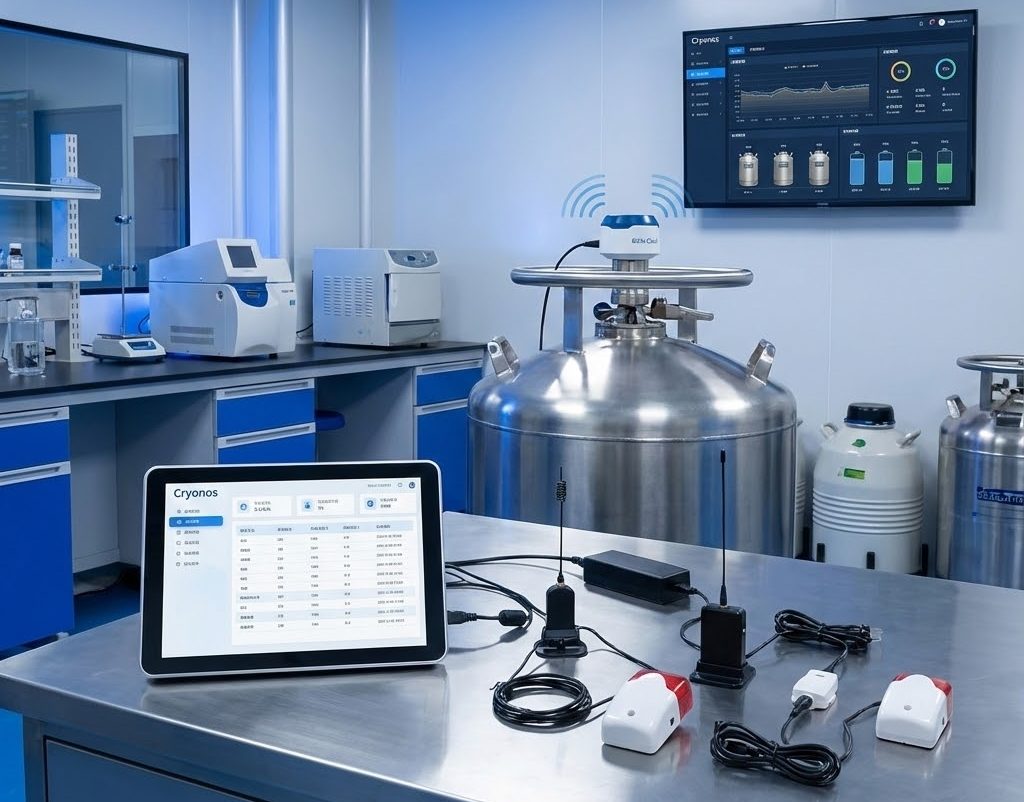
Oxygen Depletion in Cryogenic Rooms: Risks and Safety Measures
Liquid nitrogen is indispensable in the laboratory, but when it is not managed properly it creates a silent hazard: oxygen depletion. Nitrogen is colourless, odourless and tasteless. People do not notice when the oxygen level drops, and by the time the first symptoms appear, there may be very little time left to react. This article summarises how oxygen depletion occurs in cryogenic storage areas and the key safety measures.
Why does oxygen drop?
When liquid nitrogen evaporates, its volume increases about 700-fold: 1 litre of liquid nitrogen becomes roughly 0.7 m³ of nitrogen gas at room conditions. In a closed or poorly ventilated room this gas displaces air and lowers the oxygen concentration. The main sources are:
- Normal boil-off from freezers and dewars
- Dense vapour released during filling and transfer
- Venting from relief valves, and hose or connection leaks
- Spills or a damaged vessel
Cold nitrogen vapour is heavier than air and can collect at floor level, in pits and in low areas until it warms up.
Oxygen levels and their effects
Normal air contains about 20.9% oxygen. Occupational safety regulations generally define an atmosphere below 19.5% as oxygen-deficient. As the level falls, attention and judgement are impaired and coordination is lost; at very low levels, unconsciousness can occur within a few breaths. Because a person can be affected without noticing the danger, and a second person entering to help faces the same risk, measures must be taken at the design stage, not at the moment of an incident.
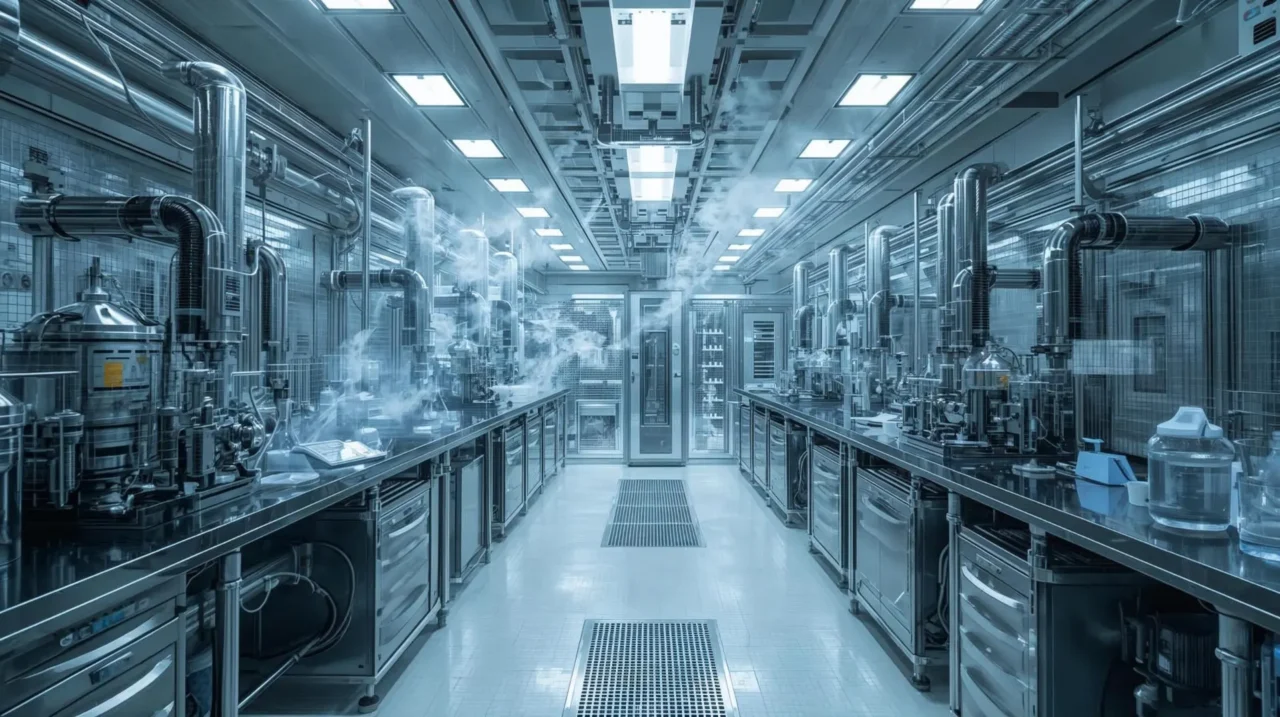
Key safety measures
- Risk assessment: Room volume, the amount of liquid nitrogen stored and used daily, the worst credible scenario (e.g. a vessel emptying completely) and ventilation capacity should be calculated together.
- Fixed oxygen monitoring: Continuously operating oxygen sensors should be installed at the height and in the number determined by the risk assessment. Two-stage alarms (e.g. 19.5% and 18%) are commonly used.
- Visual and audible warning: Alarms must be visible and audible both inside the room and outside the door; no one should enter the room during an alarm.
- Mechanical ventilation: A system of adequate capacity, extracting at low level where needed and switching on automatically with the alarm, should be installed.
- Safe filling infrastructure: Supplying freezers from a bulk tank outside the room through vacuum-insulated lines, where possible, reduces the need to carry and pour from dewars by hand.
- Personal protective equipment: Face shield or safety goggles, cryogenic gloves, a long-sleeved lab coat and closed shoes.
- Working rules: Procedures for out-of-hours and lone working, regular training, an emergency plan and tracking of sensor calibrations.
These measures should be defined for each facility on the basis of applicable occupational health and safety legislation and the guidance published by industrial gas associations (e.g. EIGA).
How Cryonos Bioscience can help
At Cryonos Bioscience we plan cryogenic storage areas as a whole, not just as a freezer purchase: LN2 supply lines, oxygen monitoring, alarms and ventilation included. For our turnkey approach, see Cryogenic Laboratory Installation; for freezers and supply tanks, see Cryogenic Products and Services. You may also find our article vapour phase or liquid phase? useful.
Let us review the safety infrastructure of your existing or planned cryogenic room together. Contact us.